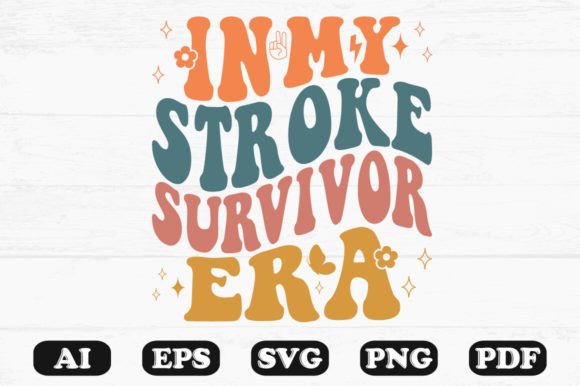
In My Stroke Survivor Era Retro Wavy Svg
As an embroidery designer and product reviewer, I’ve seen my fair share of SVGs. But when I came across In My Stroke Survivor Era Retro Wavy Svg, I knew it had potential—but also some gotchas worth noting. This design isn’t just a pretty shape; it’s a statement. Let me walk you through how it performs in real projects and what to consider before using it in your own work.
The First Impression: A Retro Vibe with Emotional Weight
From the moment I opened the file, In My Stroke Survivor Era Retro Wavy Svg struck me as something that carries a story. The wavy lines, soft curves, and vintage typography give it a nostalgic feel—like a memory from the 70s or 80s. It’s not just a design; it’s a mood. The layout is clean, but the detail level is high enough to make it stand out without being overwhelming.
This kind of aesthetic naturally fits into custom apparel, especially for those looking to create meaningful pieces. Whether it’s a tote bag for a survivor, a sweatshirt for a personal project, or a baby onesie with a subtle message, the design has a quiet strength that can resonate with the right audience.
Real-World Use Cases: Where It Shines and Where It Fails
I tested In My Stroke Survivor Era Retro Wavy Svg on several fabrics and found that it works best on medium-weight cotton, denim, and woven materials. On a tote bag, it looked great with a simple satin stitch. But when I tried it on a thin, stretchy fabric, the details started to blur, and the wave pattern lost its definition.
One of the most common mistakes with this design is using it on small hoop sizes. The wavy elements require a bit of space to breathe. If you’re working on a cap or a patch, you’ll need to adjust the design or split it into sections. Otherwise, the stitching might look cramped or uneven.
Another thing to watch: the text. While the typography is stylish, the lettering is fairly intricate. On dark fabrics, it can be hard to see unless you use a contrasting thread color. I recommend testing it in black and white mockups first to ensure visibility.
When to Be Cautious: Design Limitations
In My Stroke Survivor Era Retro Wavy Svg isn’t a one-size-fits-all design. For example, if you’re planning to use it on a baby onesie, you’ll want to simplify the details. Tiny corners and dense stitch areas can be uncomfortable for little ones. Similarly, if you’re creating a holiday gift, you may want to avoid overly complex elements that could detract from the overall charm.
Layered garments can also be tricky. If you’re embroidering over a printed shirt, the design might not show up as clearly. And if you’re working with textured fabrics like linen or canvas, the wavy pattern could get lost in the grain. Always do a test run before committing to a large batch.
Impact on Visual Appeal and Customer Perception
There’s no denying that In My Stroke Survivor Era Retro Wavy Svg adds visual interest to any project. Its retro style makes it instantly recognizable, which is great for branding or handmade products. But it’s also important to consider how customers will react. Some may find it too bold, while others will appreciate its uniqueness.
For small business owners, this design can elevate a product’s perceived value. It’s perfect for Etsy sellers or craft fair vendors who want to offer something different. However, it’s not ideal for mass-produced items where consistency is key. The design requires a bit more attention to detail, which can be a double-edged sword.
Practical Tips for Embroidery Designers
If you’re planning to use In My Stroke Survivor Era Retro Wavy Svg in your work, here are a few things to keep in mind:
- Test the design on scrap fabric before starting a real project.
- Check thread color contrast, especially on dark backgrounds.
- Review stitch density to ensure the waves don’t look too heavy or too light.
- Confirm the hoop size required for the design.
- Inspect small details like corners and lettering for clarity.
- Use proper stabilizer to prevent puckering or distortion.
- Verify licensing terms before selling finished items or digital files.
These steps will help you avoid common pitfalls and ensure that your final product looks professional and polished.
Final Thoughts: A Design That Demands Respect
In My Stroke Survivor Era Retro Wavy Svg is a design that demands respect. It’s not just about aesthetics—it’s about intention. Whether you’re creating a personalized gift, a boutique product, or a commercial embroidery project, this design can add depth and meaning to your work.
But it’s not without its challenges. It requires careful consideration of fabric type, hoop size, and stitch density. If you’re willing to put in the work, though, it can become a standout piece in your collection. Just remember: not every design is right for every project. Know your audience, test your work, and always think about how the final product will be used.
For now, I’ll be keeping this design in my library for future projects. It’s not just a file—it’s a conversation starter, and that’s something worth investing in.